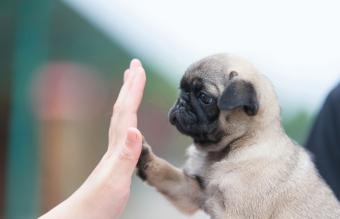
The Pug is a jolly little character who loves his family with all his heart. If you're looking for a hardier-than-average toy dog, this breed's playful and devoted nature might just win you over. Take a look at those soulful eyes and adorable wrinkles, and just try to resist. It will be more difficult than you can probably imagine.
Chinese Pug Dog Characteristics
Appearance
According to the American Kennel Club breed standard:
- Body: This dog is very stocky in appearance with a broad chest and strong, muscular legs. The tail is carried tightly curved over the body. The dog has a square outline when viewed from the side.
- Weight: Males and females should both weigh approximately 14 to 18 pounds.
- Head: The head is very round with a lot of facial wrinkles and an extremely flat muzzle that is nearly identical to that of a Pekingese. The teeth should be set slightly undershot, which means the lower jaw extends slightly farther out than the upper jaw so that the bottom teeth close in front of the upper teeth. Ear leathers are short and hang down.
- Coat: The coat is a golden/fawn color with a black facial mask and black ear tippings. However, there are solid black Pugs and, even more rarely, apricot or silver.

Personality/Temperament
Pugs are known for their wonderful temperaments, and they are usually a good choice for a family pet because they love children. They have plenty of energy, but they know when to give it a rest. They show a great deal of affection for their human companions and get along well with other dogs in most situations. The ideal Pug is both charming and steady-natured. They are also not known for being excessive barkers which makes them a great choice for apartment and condo dwellers.

Gait
This dog moves at a jaunty gait. The front legs should be straight and show no weakness in the patterns that would give the impression of a "Chippendale" front. The feet should point forward. The rear legs should be strong with no weakness in the hocks and stifles, and rear feet should also point forward. There is a slight roll across the rear that is an important part of this dog's signature movement.
Training
Pugs are intelligent little dogs that tend to do well with proper training.
- Potty training may take time for young puppies to grasp but improves greatly with age and training consistency on the part of the owner.
- Pugs are also terrific candidates for obedience training, which suits their energy level without too much physical exertion except for the jumps. It is not difficult to obedience train these dogs.
- They may not be as well-suited for agility because of their short muzzles, which put them in the category of Brachycephalic dogs. Due to this fact, they may be prone to becoming winded earlier and need a little extra protection from the heat. Ultimately, every dog is an individual, and there are likely some wonderful Pug agility dogs out there that experience none of these potential problems.
- Since these dogs are so friendly and adaptable, they can also make wonderful therapy dogs.
Are Pugs Aggressive?
If you search for Pugs on the Internet, you may see indications that they are known for aggression. The truth is that Pugs are generally good tempered dogs. The breed does not have an inherent tendency toward aggressive behavior. However, pugs that are aggressive to dogs, people or to both can be found, and this usually is due to genetics and owner behavior.
Poor Breeding Practices
Because they are a very popular breed, there are many Pugs that are bred primarily to make money and without care to producing dogs that are healthy and have good temperaments. This can lead to dogs that have brittle, anxious personalities. If these dogs aren't given proper socialization and behavior modification and enrichment, they can become aggressive due to fear or frustration.
Lack of Training
Another reason you may see aggression among Pugs is that a segment of dog owners who seek out small dogs are unfortunately not likely to train and socialize them. These dogs develop what is called Small Dog Syndrome. According to Certified Dog Behavior Consultant Barbara Davis, CDBC of BADDogs Inc. in Corona, CA, "We see less small dog owners at our puppy socialization and training classes because they feel it's not necessary for small dogs. Unfortunately, this can lead to dogs that reach adulthood fearful of new people, places and dogs and they can react aggressively. Pugs are cute, funny and intelligent dogs and the ones I encounter with issues are either due to poor breeding or an owner who did not socialize and train the dog, or often both."

Pug Grooming Tips
Grooming a Pug is relatively standard.
- A nice bath once or twice a month will keep the dog fresh and clean.
- Wipe out the facial wrinkles once a day. They are prone to collect dirt and tears, and this combination of moisture and bacteria can produce a sour-smelling, cheese-like substance.
- Clean the ears once a week.
- Brush two to three times a week to collect loose hair.
- Toenails should be kept moderately short.
- Brush the teeth four to five times a week.
- If there is any sign that the anal glands need expressing, this is best left to a veterinary professional.

Exercise
Being of such stocky build, Pugs are naturally prone to obesity. It's important that they get a moderate amount of exercise, but take care not to overdo it since these dogs are also prone to overheating. A daily walk of 15 to 20 minutes is sufficient. Watch carefully to make sure the dog is not becoming winded and reduce the length of the walk during hot and humid weather.

Health and Life Expectancy
Pugs are fairly long-lived, and many live as long as 12 to 15 years. However, according to the Pug Dog Club of America, this breed is prone to some health issues that potential owners should be aware of, including the following.
General health issues:
- Obesity due to the Pug's tendency to overeat and get less exercise.
- Elongated soft palate or "Brachycephalic Airway Obstruction Syndrome" which leads to breathing problems.
Neurological issues include:
- Pug Dog Encephalitis is an inflammatory and fatal condition affecting the central nervous system.
- Epilepsy is a disorder that causes seizures which can be mild to severe.
Eye problems include:
- Corneal ulcers produce red eyes that are painful for the dog.
- Distichia involves an eyelash growing in the wrong place which can lead to pain, infections, and blindness.
- Entropion is a condition where the eyelid develops incorrectly and can lead to irritation and blindness.
- Proptosis is a condition where the dog's eye appears to "push" outward and can lead to a loss of eyesight.
Orthopedic issues include:
- Luxating patellas are commonly found in small dogs and involve a dislocation with the dog's knees.
- Hip dysplasia is a painful condition of the skeleton that can lead to lameness.
- Legg-Perthes is a condition leading to lameness in the hip area.
- Hemivertebrae is a genetic condition where the dog is born with a deformed spine that can minimal to severe effects on the dog's mobility.
Although this list may seem daunting, keep in mind that not every Pug will suffer from one or more of these conditions. Still, it's important to know about them if you plan to own a dog of this breed.

Pug History Facts
Pugs have been around for a very long time.
- According to the Pug Dog Club of America, the Pug is a very ancient breed that was a favorite of Chinese Emperors, and its existence dates back to 400 BC. These dogs lived a life of luxury alongside other Chinese breeds such as the Shih Tzu and the Pekingese.
- It's believed Dutch traders were responsible for bringing the breed to Europe. Pugs became especially popular in England where Prince William II's love of the breed made them very fashionable.
- The breed gained official recognition from the American Kennel Club in 1885, and although its popularity waned around the turn of the century, Pugs are once again popular pets for people who want a small but sturdy companion dog with a happy-go-lucky attitude.
Finding a Pug Puppy
Because the quality of Pugs can vary depending on the breeder, it's very important to do your research and find a breeder who is looking to further the breed and is concerned with good health and temperament. Expect to be interviewed thoroughly by your breeder and for them to be eager to answer all of your questions too. Visit the Pug Dog Club of America's website to search their breeder directory. PDCA also recommends checking with their local clubs to see if a Pug breeder is a member.

How Much Is a Pug Puppy?
You should assume you will pay between $500 and $2,000 for a purebred Pug puppy from a breeder. Prices can be much higher if you are buying a show quality dog. In comparison, a Pug through a rescue group will probably cost you around $300 from a breed-specific rescue and possibly less from an all-breed rescue or animal shelter.
Is a Pug the Right Dog for You?
It's important to research any breed you're interested in, but it's even more important to visit reputable breeders and experience the dogs first hand in order to decide if a particular breed is right for you. Pugs can make fabulous companions as long as you're not looking for an especially athletic breed. What these dogs lack in athletic prowess is made up for in comfortable companionship and affection. All things considered, it's a good trade.