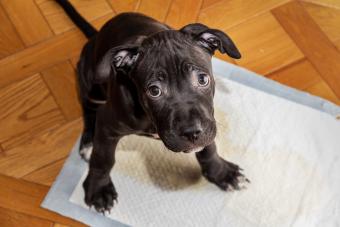
House training you pup can be a challenge under the best weather conditions, but learning how to potty train a puppy in winter is particularly difficult. The cold weather and snow can make it harder for your puppy to find somewhere appropriate to go and might also reduce their desire to go outside. In addition, if they do go out in the snow or ice, they could slip and fall, or damage their delicate puppy paws. Fortunately, even though it's difficult, potty training your pup during the colder months doesn't have to be pain.
Go Outside with Your Pup
While some puppies will run face-first into a snow pile, others only want to be outside long enough to do their business. For puppies who are sensitive to the cold, involving yourself in the process can help your puppy learn to go potty outside in the wintertime. Yes, it's uncomfortable, but it's best to go out with them. Clear a path for you and your pup and walk out with them each time.
Of course, never leave a puppy outside in cold weather if you haven't taken measures to keep them safe. This includes providing a place for them to escape the cold, as well as liquid water and other necessary precautions. If it's too cold for you, it's probably too cold for them, and puppies are more delicate than adult dogs. Stay safe, and while you're training, stay outside with them until they go potty.
Start With Cue Training
When the weather is warm, it often isn't necessary to use a cue to encourage your pup to potty. When it's freezing outside, cue training can help a lot. When you train your puppy with a cue to go potty, they learn to spend less time wandering around, and are more likely to do their business once they reach their preferred area.
While this isn't always necessary, it certainly helps when the weather is chilly. Even dogs who enjoy being outside in the cold can overdo it. You may not want them to spend too much time outside, depending on the temperature.
Exclaim "Go potty" once you have reached the point you want them to relieve themselves. Make sure you give this command right before they are about to go. Then, give them lots of praise. This way, they'll learn to associate your command with the desired action.
Grab a Coat
If your puppy is one that isn't a fan of the cold, a coat could become extremely helpful. The best winter dog coat will keep your dog warm and dry in the coldest weather. It should be waterproof, windproof, and breathable so that it doesn't trap moisture next to your pooch's skin. There are many types of dog coats on the market. They come in various styles and sizes, so you should be able to find something that fits your dog perfectly. Find a coat that suits your dog and keeps them warm:
- Determine what type of material your dog likes best. They might like a soft cotton blend coat that feels nice against their skin, or they may prefer something with more padding, like fleece or polyester fleece.
- Make sure it fits. Before buying any coat for your dog, make sure it suits your puppy's body shape and fits well. Don't use a coat that causes problems for your puppy when they're walking or running around in the snow.
- Pick a coat that's easy to clean. Make sure that it's machine washable so it will last longer.
- Check out the lining. Consider a coat that has a detachable lining, so you can wash it separately from the outer shell.
- Make sure it doesn't get in the way. If your dog has long hair, choose a coat with elastic leg straps so they don't get tangled up in their fur when they walk or run around.
Time Your Pup's Habits
Cold weather makes every aspect of potty training more difficult.When weather is especially chilly and your puppy is reluctant to go outside, you can experience setbacks and accidents. This is normal. The best way to prevent problems is to watch your puppy closely and try to time their potty breaks.
Stick to a feeding schedule, especially early on. Puppies are eating three times a day, and they often eliminate right after eating, so this can be exhausting, but don't give up. Watch them as they eat, and plan to take them out as soon as they finish.
Give them regular potty breaks outside, even if you don't think they need to go. Try to time these breaks evenly, at set intervals throughout the day. So, if you feed in the morning (always at the same time), try to take them out every two hours, especially if they're very young. As they grow, you'll be able to space breaks out. Just make sure you take them out at the same times, to help build routine.
Potty training accidents are more likely to happen when going outside is difficult. Puppies don't know how to signal to you that they need to go. For younger pups, they may not even have full control of their bodies yet. Stay patient, and never get mad at your pup. Stay positive and stick to using your schedule and training cue.
Take Potty Breaks During Warmer Times
To make the potty training process easier, you can adjust your puppy's feeding schedule to correlate with the times the weather is warmer. Usually, this is in the middle of the day until the evening hours. Depending on how old your puppy is, they may still need to go potty during the colder hours, but if you can schedule most of their potty breaks during the warmer time periods, your pup may be more willing to use the bathroom outdoors.
Protect Their Paws
If conditions outside include snow and ice, you may want to get your pup a pair of dog booties. This might take some getting used to, and yes, it adds a layer of difficulty if you have to dress them every time you head outside together. However, it can prevent cold damage to your pup's paws.
Another option is to use a product to help protect your dog's paws, such as Musher's Secret. Just wipe some on your puppy's paws, and they should be good for a short trip into the snow. Just be aware that this food-grade wax does eventually come off. When you head back in together, wipe their paws down to remove any excess.
Also, be aware that if you use salt in your driveway, or if rock salt buildup occurs around your home, this can be harmful to your pup's paws. Play it safe and give them protection if you aren't sure.
Use Puppy Pads in Extreme Weather
When it's just too cold to go out, there's no shame in using an alternative to keep your house clean. Potty training with puppy pads is a great way to get your puppy comfortable with relieving themselves in the house during extreme weather conditions. It can be a more effective method than potty training with paper because you can use it indoors and outdoors. This means when the weather gets better, you can place the potty pads outside, so your pup knows to go on the pad regardless of where it is.
When using puppy pads, make sure that they're not scented or colored. This will help your puppy understand what's appropriate to go on and what's not. You also need to make sure that there are enough pads available so that the area doesn't become soiled before your dog has had a chance to use it.
Weigh Your Options
Potty training in the winter is still possible if you take the right steps. You'll need to ensure that your puppy doesn't spend too much time inside and that they have plenty of opportunities to go outside. Protect their paws, stick to a schedule, and keep using your cue word. If they can't get outside, consider using indoor potty options like pee pads or litter boxes. The trick to making potty training in the winter less of a hassle is to stay consistent and vigilant. If you take your time and stay positive, your puppy will be a pro in no time.


