
Dog trainers and canine behaviorists make dog training look like it's a breeze, but once you get down to it, it's not as simple. Making your own dog training plan, preferably before you even bring your dog home, can help tremendously. Of course, you don't have to stick to it to the T, but it will give you a good foundation to start with and set you up for success.
I've given you a template and some quick tips, along with a printable pdf to create your own training plan for your dog.
Every dog is different, so if you have to adjust your plan after your pup gets home, rest assured that's completely normal in this process.
Example Dog Training Plan: Basic Commands
Sometimes, it's easier to create your own dog training plan after seeing someone else's. Here's an example dog training plan created to teach basic commands. This would then be taken and input into a calendar or printable document to share with the whole family, so everyone knows what to train and when.
Week 1: Sit and Stay
Teaching your dog to sit will lay the foundation for other commands. These commands are easy for most dogs.
- How: Stand with your dog in front of you, capturing their full attention. Hold a treat near their nose for them to smell and see. Then, slowly lift the treat over their head towards their tail, prompting them to sit. While doing this, clearly say, "Sit." As soon as they sit, instantly reward them with the treat and lots of praise.
- Difficulty level: 1
- Schedule: 15-minute sessions twice daily. Most dogs can master this command on the second day.
After your dog masters the 'sit' command, you can then begin teaching them how to stay.
Teaching the stay command involves:
- How: Begin training your dog to stay by first having them sit, then use the hand signal (palm forward) and say "Stay" firmly but calmly. Slowly extend the duration of the stay before giving them a treat and praise, starting from a few seconds and working up. Practice in different places with varying distractions, and always go back to your dog to reward them, reinforcing the stay command.
- Difficulty level: 3
- Schedule: 10-15-minute sessions, twice daily. Most dogs take two to three days to master this command, but some may take up to one full week.

Week 2: Down
Teaching your dog the 'down' command will help with reinforcing the 'stay' command and help keep them calm in stressful situations.
- How: To teach your dog the 'down' command, first ask your dog to sit, then hold a treat close to their nose. Slowly move your hand down to the ground, leading their nose to follow the treat, and say "Down" in a clear, firm tone. Once they lie down, immediately give them the treat and praise them to reinforce the behavior.
- Difficulty level: 3
- Schedule: 15-minute sessions, twice daily. Most dogs catch on to this command within a few days, but some may take up to one week.
Week 3: Come
Now that you've mastered sit, stay, and down, you're ready to move on to the 'come' command. Teaching your dog to 'come' is important so your dog can be off-leash in safe areas and steer clear of danger by returning to you when called.
- How: Start teaching your dog to come into a quiet area using a cheerful voice and a treat or toy as a reward. Praise them as they come to you, and give them the treat or playtime when they arrive. As they get better, practice from farther away and with more distractions.
- Difficulty level: 4
- Schedule: 10-minute sessions, twice daily. Unlike the prior commands, this one may take longer to master. Some dogs may take up to several months to learn this command fully. Continue to teach this command while moving on to the others if necessary.
Week 4: Leave it
Teaching your dog to 'leave it' can keep them out of some pretty gross situations. If they're carrying the dead squirrel from the backyard, for example, the 'leave it' command can come in handy. In the house, it can be useful if they're getting into something they're not supposed to, like the cat's food dish.
- How: Start training your dog to 'leave it' by holding a treat in a closed fist and allowing them to sniff it. When they back off, say "Leave it," then reward them with a different treat. Keep practicing by placing the treat on the floor, covering it with your hand, and rewarding them when they obey the command.
- Difficulty level: 2/3, depending on the individual dog
- Schedule: 15-20 minute sessions, twice daily. This will take two to three weeks to master for most dogs.
In addition to this training exercise, if your dog goes toward something they shouldn't, you can use the 'leave it' command to reinforce their understanding.
Week 6: Loose-Leash Walking
Loose-leash walking is important for enjoyable and controlled walks, with your dog learning to walk beside or behind you, not in front. It's a bit harder to teach than other skills, needing regular training and patience. But getting it right leads to better, safer walks and strengthens your leadership role.
- How: Start with your dog on a leash and reward them with treats and praise when they walk beside you without pulling. Gradually increase the distance and duration of walking without pulling, using consistent commands like "let's walk" or "with me." Practice in a variety of environments, and if your dog starts to pull, stop walking until the leash is loose again before continuing.
- Difficulty level: 5
- Schedule: 20-25 minute sessions, twice daily.
Loose-leash walking is a skill that takes most dogs a while to master, usually anywhere between a few weeks and a few months, depending on the individual dog.
1. Start Your Own Dog Training Plan With Everyone Involved
Before you start writing your dog training plan, you'll need to answer some questions that will factor into how it's done. It's okay if you're not quite sure yet about some of the answers, but do your best.
Who Will be Training Your Dog and Following the Plan?
Will it be you or someone else? Whoever will be doing the training should be the one who creates it with you.
When training a dog with a spouse, roommate, or child, it’s crucial to work as a team. If another adult is helping with the training, it's a good idea to spend about an hour discussing your training goals and methods. Consistency is key; using different techniques can confuse your dog, just like getting conflicting directions from two people can leave you unsure of which way to go.
Will Someone Else Be Co-training With You?
If you're training with someone else, they should work on the plan with you, including kids. Make sure that only those involved in your agreed-upon training plan are guiding your dog. If others start giving commands or rewards that aren't part of your plan, it can lead to confusion and frustration for both you and your dog. Imagine trying to learn something new, but everyone around you keeps changing the rules — it would be pretty overwhelming. It's the same for your dog. Keeping a unified approach ensures your dog knows what to expect and can learn and respond confidently to your training.
2. Make a List of Dog Training Goals

You're ready to start drafting your dog training plan. And the next best step is to identify what you want your dog to learn. Keep in mind that these may change depending on whether you decide on adopting a puppy who doesn't have any training or an adult dog who already has a firm foundation in place.
Goals can include a variety of things but generally cover:
Commands
Things your dog or puppy should learn to do when receiving a cue from you.
Puppy Pads or Housetraining
Learn to use the puppy pads located in 'X' areas of the home or associate using the potty outside with rewards.
Stop or Manage Unwanted Behaviors
Like jumping, mouthing, barking, etc. These may have less to do with a specific command and more to do with managing or redirecting your dog to perform a wanted behavior instead.
These are the basics, but you can switch out any of them for more advanced training adventures, including advanced commands, learning tricks, barking, or any other behaviors you need help with. We aren't going to work on specifics right now, but these are some things to keep in mind.
Break Out Your Long-Term and Short-Term Goals
Make sure to break down the goals you chose into smaller pieces that are manageable for your dog. This helps reduce overwhelm for both you and your dog. It's kind of like what I do when I'm working on my goals. Let's say I have this huge goal. At the top of the page, I jot down what the goal is. At the end, I can see what I want to achieve. Now, I need all the little steps in between to get me from Point A to Point B.
Some great, broken-down goals include:
- Learn how to sit
- Learn how to stay
- Learn how to potty outside
- Walk loosely on the leash
- Sit still in distracting situations
Whereas a goal like "sit at a cafe with me" would be better if broken down into smaller chunks, like:
- Walk loosely on the leash
- Go to "place"
- Sit still in distracting situations
- Don't jump on people who approach
3. Get Aligned on Training Methods
As a canine behaviorist, I am a firm believer in positive reinforcement training. Honestly, I don't encourage any other training types. That being said, clicker training is a form of positive reinforcement training, but instead of giving treats the entire time, your dog will associate a clicking noise with praise.
Whatever method you choose, it's important that everyone training your dog uses the same methods to make sure your dog receives clear, consistent messages.
4. Identify the Barriers
For each smaller goal (the ones you broke down into smaller pieces in Step 2), make a list of barriers. This includes factors like:
Complexity Level
How complex will the goal be for your dog to learn?
Prompting
How much prompting will your dog need?
Warm-up
The amount of warm-up time you'll need.
Length of Time
How long do you expect the process to take?
Distractions
What distractions could get in the way?
To make a list of barriers effectively, you'll need to spend at least a few days with your individual dog. During this time period, observe your dog's behavior while noting their individual strengths and weaknesses. You should get a sense of how frequently they're distracted, whether or not they pay attention to you, and how often they look to you for guidance.
5. Assign Time Frames and Put Them on the Calendar
Some dogs will learn faster than others, but in general, you can expect most dogs to follow a similar timeframe. Make a week-by-week list of what to work on. If your dog takes less time to learn a skill or more time to gain an understanding, adjust your timeframe as needed.
What Times Will Training Take Place?
Training should happen about the same time each day, give or take a little time.
Training your dog requires daily effort and consistency. Let's say your workday is from 8:00 a.m. to 4:00 p.m.; you'll have the evening hours from when you get back until bedtime to carve out a training schedule. It's a good idea to chat with anyone else who's helping train your dog (like a co-trainer, if you have one) to figure out the best time for these sessions.
The good news is, you don't need to set aside a lot of time — usually, about 30 minutes each day is more than enough (and sometimes even less time). It's important not to tire out your dog with long training periods. Plus, it's more practical for your schedule to keep training sessions short and sweet. This way, you can efficiently use your time without overloading your dog or yourself, making the training process enjoyable and effective for both of you. We'll dig deeper into this after you set some goals.
Different Breeds Means Different Training Timeframes
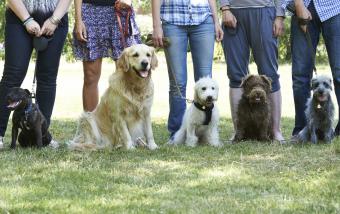
Dogs can be separated into three categories: highly trainable, moderately trainable, and less trainable. The highly trainable breeds will often require fewer repetitions to learn a command or behavior than the less trainable ones.
Highly Trainable
Highly trainable dog breeds can learn commands quickly, often understanding the command or desired behavior within a few tries. The basic training commands — sit, stay, down, come, leave it — may be shortened to as little as a few weeks with these breeds. Highly trainable breeds include German shepherds, shetland sheepdogs, shelties, border collies, and poodles.
Moderately Trainable
Learning the basic training commands can take up to a few months for moderately trainable breeds to master. These breeds tend to be easily distracted due to their high energy levels and retain puppy-like qualities for longer periods of time than other breeds. Moderately trainable breeds include labrador retrievers, golden retrievers, schnauzers, springer spaniels, and boxers.
Less Trainable
Less trainable breeds are often harder to train because they tend to be more single-minded and a little less eager to please. It may take them up to six months to learn the basic commands. Less trainable dog breeds include beagles, lhasa apsos, bull terriers, basset hounds, and beagles.
Once your done with basic training exercises, you'll have a feel of how long it takes your dog to learn new skills. You should be able to guage how long it will take them to master additional commands (like shake and other tricks) at this point.
Tips to Implement the Training Plan Successfully
Keeping the following tips in mind will help you develop a dog training plan that everyone can follow. Print out the document here, fill it out, and stick it to the refrigerator or somewhere else accessible to the family.
Start Immediately
Whether you have a puppy or an adult dog, training should begin the moment you pick up your pooch. The earlier you start training, the easier it will be to reinforce those rules in your household.
Be Clear
Make sure your training is clear and consistent. Use the same method each time you train the command or behavior. And make sure your co-trainer is doing the same.
Short Sessions
Keep training sessions short and fun (15–20 minutes).
Don't Take on Too Much at a Time
Limit your initial training plan to a few key priorities.
Remain Patient
Be patient and consistent; progress may vary depending on the dog's age and breed.
Socialization
Socializing your dog can help them become well-rounded and less distracted by their surroundings.
Once you've set your goals, it's extremely important that the entire household get involved to provide consistent, positive reinforcement to your pet.
Practice Makes Perfect
Training is an important part of dog ownership. With time, patience, and lots of repetition, you can teach your dog all the necessary skills dogs need and establish yourself as the leader of the pack. Remember, training is not just about obedience; it's about building a bond and understanding between you and your dog. Tailor this plan to suit your dog's unique personality and needs.


