Are you thinking about bringing a Boxer into your home? If you are looking for a high-energy, medium-sized, enthusiastic canine companion that doesn't require extensive grooming, a Boxer just might be the right choice for you. However, it's important to be aware that obedience training is essential with Boxers, as is true of any highly energetic breed. Before you make a final decision, be sure you are ready to commit the time and energy needed to properly train your new pet.
Origin of Boxer Dogs
Considered a German breed, the Boxer was originally developed from an old breed known as the Bullenbeisser -- also known as the German Bulldog, now extinct -- that was used to hunt wild boar. Around 1830, this breed was crossed with an early version of the English Bulldog, and it was this stock that was refined into the modern Boxer.
The first Boxers were introduced into the United States in 1903. The American Kennel Club (AKC) registered the first Boxer shortly after in 1904. Boxers were enlisted in the military when World War I started, serving as courier dogs, pack dogs, attack, and security dogs.
Later, soldiers returning from World War II carried their Boxer mascots home with them, and Boxers became popular in the United States in the 1940s. Through them, the breed was exposed to the general public, and they quickly established themselves as popular companion animals, show dogs, and guard dogs.
Breed Characteristics
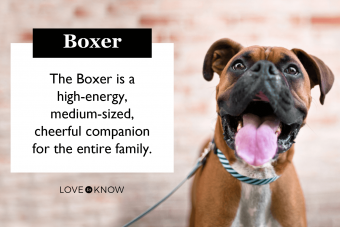
A variety of factors influence Boxer temperament, including genetics, training, and socialization. Puppies with a well-rounded temperament are adventurous and cheerful, and enjoy interacting with others.
Appearance
The Boxer is a very square built, medium-sized breed that stands anywhere from 21 to 25 inches tall at the shoulder and weighs roughly 60 pounds. According to the AKC Boxer breed standard, their jaws should be very square with an undershot bite. Boxers have soulful brown eyes, but they do not all have the same color fur. Acceptable colors are fawn or brindle, with some white markings permissible as long as they contribute less than one-third of the overall color. White Boxers are not recognized by the AKC.
Temperament

Somewhere along the line, Boxers got a reputation for being guard dogs, perhaps because they do look as though they could be a little menacing if they had a mind to. However, aside from being a little stand-offish with strangers, these dogs are quite affectionate and love to clown around with their families. They also tend to believe that they were bred to be lap dogs, even well after they hit the 60-pound mark.
Boxers are also very energetic, so be prepared to give them plenty of exercise and play time. If you don't let them work off their extra steam in positive ways, Boxers will come up with their own entertainment, and chances are you will not be pleased! Unless you are ready for a whole lot of dog, think carefully before you choose a Boxer.
Boxers actually do quite well in a family setting, as they are surprisingly gentle with children. However, each dog is an individual, so be sure to provide proper training and supervision to make sure both your Boxer and your children understand the rules.
Training
Training is a must with this breed. They are so energetic and robust that you simply have to teach them to obey commands to be able to control them. Commence obedience training seriously at 6 months of age, the minimum age acceptable for training classes. Until then, you can work on getting the dog used to walking on a leash. Boxers take well to training, as long as you are consistent and spend time practicing with them on a regular basis. To prevent mistrust and damaged bonds, always utilize positive reinforcement.
Health Issues
Boxers that receive proper veterinary care and good nutrition can live long and healthy lives. However, there are a several health concerns for this breed. According to the American Boxer Club, this breed is subject to a number of health problems, including but not limited to:
- Canine Hip Dysplasia: Causing instability in the hip joint
- Cancer: Boxers are especially prone to developing mast cell tumors, brain tumors, and lymphoma
- Hypothyroidism: Caused by a deficiency of thyroid hormone
- Bloat: A life-threatening condition that can affect large, deep-chested dogs
- Allergies: Allergies are common among boxers, including both environmental and food-related allergies
Lifespan
Boxers have an average lifespan of 10 to 12 years. However, many dog owners lose their pets far sooner, often due to cancer. However, some Boxers live to be 13 to 15 years old, and occasionally, members of have been known to live to be up to 16 years old.
Grooming
Boxers do not require extensive grooming. They are very clean pets and only shed moderately. A nice brush with a bristle brush should remove what little dirt you may find, and distribute the coat oils to give your pet a glossy sheen. Boxers rarely need bathing, but you can wash their feet if they've been prancing through the mud. Most Boxers tend to wear their nails down naturally with exercise, so just check them once in a while and give a little clip if needed.
Although the Boxer is born with large floppy ear flaps and a long thin tail, many breeders in the USA choose to have the ears trimmed and taped to stand erect, and have the tail docked short. This practice of altering these dogs began in Germany, and its purpose was to give wild boars less dog flesh to tear during the hunt.
Famous Members of the Breed
During the Franco-German War in 1871, a white boxer named Box fought with his handler on the front lines. When Box sensed his handler was in danger, he gave his life to save him. Second Lieutenant Hanover Burckhardt, the handler, submitted a letter stating that he would have died in battle if his dog weren't by his side. The Lion of Belfort, a sculpture commemorating the Franco-German War, serves as a daily reminder of Box's valor.
Purchasing or Adopting a Boxer

Does the idea of owning a Boxer seem like a good choice for you? If so, you'll need to look for a reputable breeder or rescue organization to help you locate your new pet. If you want to find a Boxer puppy, consider using the AKC Marketplace.
Rescue Organizations
If you'd like to adopt a rescue dog, the American Boxer Rescue Association is a good place to start your search. The association's website contains contact information for member rescue groups located throughout the United States. PetFinder and Save-a-Rescue offer directories to look through for Boxers and mixes of all ages. You can also look through breed-specific organizations:
- Adopt a Boxer Rescue: A non-profit organization adopting to the states of Connecticut, Delaware, Maryland, Massachusetts, New Jersey, New York, Pennsylvania, northern Virginia, Washington D.C. and Rhode Island
- Lone Star Boxer Rescue: A non-profit fully operated by volunteers in Texas. There is no adoption fee on dogs that are 10 years old or older.
- Blue Ridge Boxer Rescue: Adopts to the states of North Carolina, South Carolina, and Virginia. They adopt to indoor homes only.
Is This the Right Breed for You?
The Boxer is a good choice if you are an energetic person looking for a high-energy, clever companion who appreciates social interaction. They're not the greatest breed for those who live in apartments or lead sedentary lifestyles. Before taking a Boxer home, you should be willing to put in the time to be a responsible Boxer owner.