Australian Cattle Dogs are the superstars of the herding breeds. Keenly intelligent and incredibly tenacious, they are one of hardest-working breeds of all. These dogs make fantastic companions in the right setting, but they need a very active lifestyle or all their intelligence and energy will be funneled into destructive behaviors. Are you up for the challenge of living with one of these dogs?

History and Origin
The Australian Cattle Dog -- also known as the ACD -- was developed in Australia in the 1800s by ranchers who were in need of a dog that had the stamina to work long hours in harsh conditions. There is a good deal of debate about which breeds contributed to the development of the breed, but according to the American Kennel Club (AKC), these breeds included dingo-blue merle Collie crosses, Dalmatians and black-and-tan Australian Kelpies.
Although the ACD has been around for quite some time, it wasn't until 1980 that the breed was officially recognized by the AKC.
Breed Characteristics
Although each dog breed has its own look, Australian Cattle Dogs are very distinctive. They have a lively, intelligent appearance, and are often happiest working outdoors. Australian Cattle Dogs require a lot of training and exercise to stay in good shape.
Appearance
The Australian Cattle Dog is stocky with a body that is slightly longer than it is tall. The head is wide with dark brown, oval-shaped eyes and prick ears. Their nose is black, and their bite is a scissors bite, which means the bottom teeth fit just behind the upper teeth when the dog's mouth is closed.
Australian Cattle Dogs range from 17 to 20 inches in height at the withers and weigh 32 to 35 pounds. Unlike most breeds, females are not much smaller, measuring 17 to 19 inches high at the withers and weighing 30 to 35 pounds. These are very muscular dogs with powerful legs and broad chests. Despite their muscle mass, however, they are extremely agile dogs and move very well.
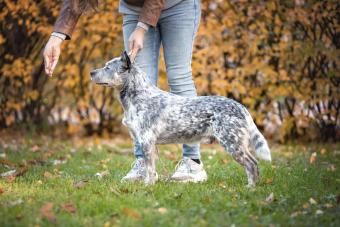
These dogs have dense undercoats and short, straight overcoats that make them ideally suited for enduring harsh weather conditions. Dogs referred to as "blue heelers" have either a plain blue coat or blue fur with mottling and speckles. They may also have black, tan or blue markings on their head. "Red heelers" have a red speckled coat, and they may have darker red markings on their head and body, although body markings are less desirable.
Temperament
Cattle Dogs have very interesting personality traits that can sometimes be as exasperating as they are rewarding. A lot depends on how an individual dog is raised and kept.

This intelligent, active breed requires a home that can provide a great deal of both mental and physical stimulation. As a working and herding breed, this dog will likely not be satisfied leading a sedentary lifestyle. The ACD loves to work and can become destructive if not provided with an outlet for their physical energy and mental dexterity. Unlike some dogs who are content with daily walks, the ACD needs to either work as it was bred to, or live in an environment that is especially stimulating and provides ample opportunity for activity.
This breed's nature is to be loyal, protective, and attentive, which makes them ideal watchdogs. The loyalty of an ACD remains with their owner, and they may be wary or suspicious of strangers. Although completely obedient with their owners, they may show more independence with strangers.
Australian Cattle Dogs generally do not do well with children. The exception are dogs that have been raised around children, which tends to make them more tolerant. Children should be taught to be respectful of these dogs because this outgoing breed may display herding behaviors and nip at the heels of people in an attempt to herd them. These dogs need firm but fair training to ensure they understand that their owners are the alphas in the household.
Exercise Requirements
To say this breed needs a lot of exercise is an understatement. These dogs have an almost endless supply of energy, and they absolutely need positive outlets for it or they can wind up getting themselves into trouble. They need to be taken on daily jogs, and they appreciate games of fetch and Frisbee. Most of all, these dogs really need a job to do, because this provides the kind of mental stimulation they crave. If at all possible, they should be allowed to herd livestock or take part in herding trials.
Training
Australian Cattle Dogs are take-charge kind of dogs, so it's important to begin training them as puppies. Obedience training is a must because this puts the owner in the leadership position over the dog, and the training also promotes respect and teamwork between both partners.

Once basic obedience training is completed, don't stop there. Enter them in obedience trials, and let them collect their titles as they move up the ranks. In addition to obedience and herding, ACDs excel in sports like agility, tracking, flyball, and rally.
Health
Overall, ACDs are one of the healthier breeds. However, there are still a few health issues every owner should watch for:
- Progressive retinal atrophy - This disorder causes degeneration of the retina that eventually leads to blindness, and it's caused by a recessive trait that must be inherited from both parents. According to this study, progressive rod-cone degeneration is the predominant form of PRA that affects this breed.
- Deafness - According to the School of Biotechnology and Biomolecular Sciences at the University of New South Wales in Sydney, Australia, approximately 15 percent of ACDs suffer from hearing loss in one or both ears. The mode of inheritance is not yet clear, but there may be a link to deafness in Dalmatians, which were reportedly used as part of the breed's foundation.
- Hip dysplasia - Dysplasia is a genetically inherited condition that causes painful degeneration in the hip joints because the balls and sockets don't fit together perfectly as they should. The condition's effects may range from mild to severe. The problem is serious enough that every ACD should be screened for the disorder, and effected dogs should not be used for breeding.
Australian Cattle Dogs don't require much grooming. They typically shed about twice a year, and they'll benefit from extra bathing during those times. Only bathe them when absolutely necessary, but do check the ears and clean them on a bi-weekly basis. The nails tend to wear down naturally if these dogs get proper exercise, but you can trim the tips if needed.
Lifespan
Australian Cattle Dogs have a lifespan of about 10 to 13 years. Some may live up to 15 years of age.

Famous Members of the Breed
A dog named Bluey tends to be the most well-known Australian Cattle Dog around the world. It's hard to believe a dog could live to be nearly 30 years old, but Bluey lived from 1910 to 1939. Bluey is known as the world's oldest dog, according to the Guinness Book of World Records, living to the ripe age of 29 years and 5 months. He worked with cattle and sheep until he was eventually put down in 1939 due to poor health.
Purchasing or Adopting an Australian Cattle Dog
If you are set on a puppy, you can begin by searching the breeder directory with the Australian Cattle Dog Club of America. The AKC Marketplace is also a great place to look for your ideal puppy. You can expect to pay between $800 and $1,200, with champion lines going up close to $5,000.
Rescue Organizations
If you aren't set on an age, or are interested in mixes, you can look through rescue organizations listed on PetFinder and Save-a-Rescue. You can also search breed-specific rescues including:
- Australian Cattle Dog Rescue: A California-based, non-profit rescue organization offering solely purebred Australian Cattle Dogs of all ages.
- Buckeye Australian Cattle Dog Rescue: An all volunteer non-profit rescuing Australian Cattle Dogs from shelters in Ohio.
- Cow Dog Rescue: This organization rescues dogs of all ages and adopts them to prospective pet parents throughout Michigan.
- Pacific Northwest Cattle Dog Rescue: A rescue that depends on foster families to socialize and care for dogs until they are placed with their forever homes. Residents of the Pacific Northwest may adopt from this organization, but applicants living in Washington state are given priority.
Is This the Breed For You?
Although very loyal, Australian Cattle Dogs are not lap dogs meant to be kept strictly as pets. These dogs have energy to burn, and they are happiest when they can live on a working ranch doing the job they have been bred to do. If you have a lot of property and can give this dog all the exercise and mental stimulation they need, this could be the breed for you. If you're looking for a couch potato that will cuddle and nap all day, you'll quickly find that this breed is simply too much dog for you.